Kapālins for Azure OpenAI
GPT models deployed in your own Azure subscription. Kapālins routes each call to your deployment by name, checks the prompt and the reply on the way through, and reads Azure Monitor for the calls that went straight to the resource.


Your Azure resource, one policy on top
Calls go to the resource endpoint you own, with its key sealed in the Kapālins vault. The same redaction, injection defence and per-team policy as every other provider apply on the way.
Deployments nobody registered
Connect with a read-only service principal and Kapālins lists every deployment on the resource, so a model someone deployed last week is on the list, not a surprise.
Direct calls still land in the timeline
The Azure Monitor connector reads Azure OpenAI diagnostics and AI Foundry audit logs from Log Analytics, so traffic that bypassed the gateway is still seen.
Inline on every call. Azure Monitor for the rest.
Every governed call, checked both ways
Your application calls the gateway. Kapālins sends the request to the deployment on your resource with its api-key, streams the reply back, and inspects both directions.
- Deployment names route as model names
- Native streaming
- The same virtual key as every other provider
Every call the resource logged
The connector queries your Log Analytics workspace with a read-only service principal and turns each record into the Kapālins event shape, beside the gateway’s verdicts.
- Azure OpenAI diagnostic logs
- AI Foundry audit logs
- The same timeline, incidents and evidence chain
One endpoint, one key, every provider.
Point the application at your gateway host with a virtual key. Kapālins routes to Azure OpenAI with the key it holds, fails over when Azure OpenAI is down, and meters every call to the team that made it.
- Your app speaks OpenAI API format
- Spend metered to the team that made the call
- Block the provider domains at your firewall and this becomes the only way out
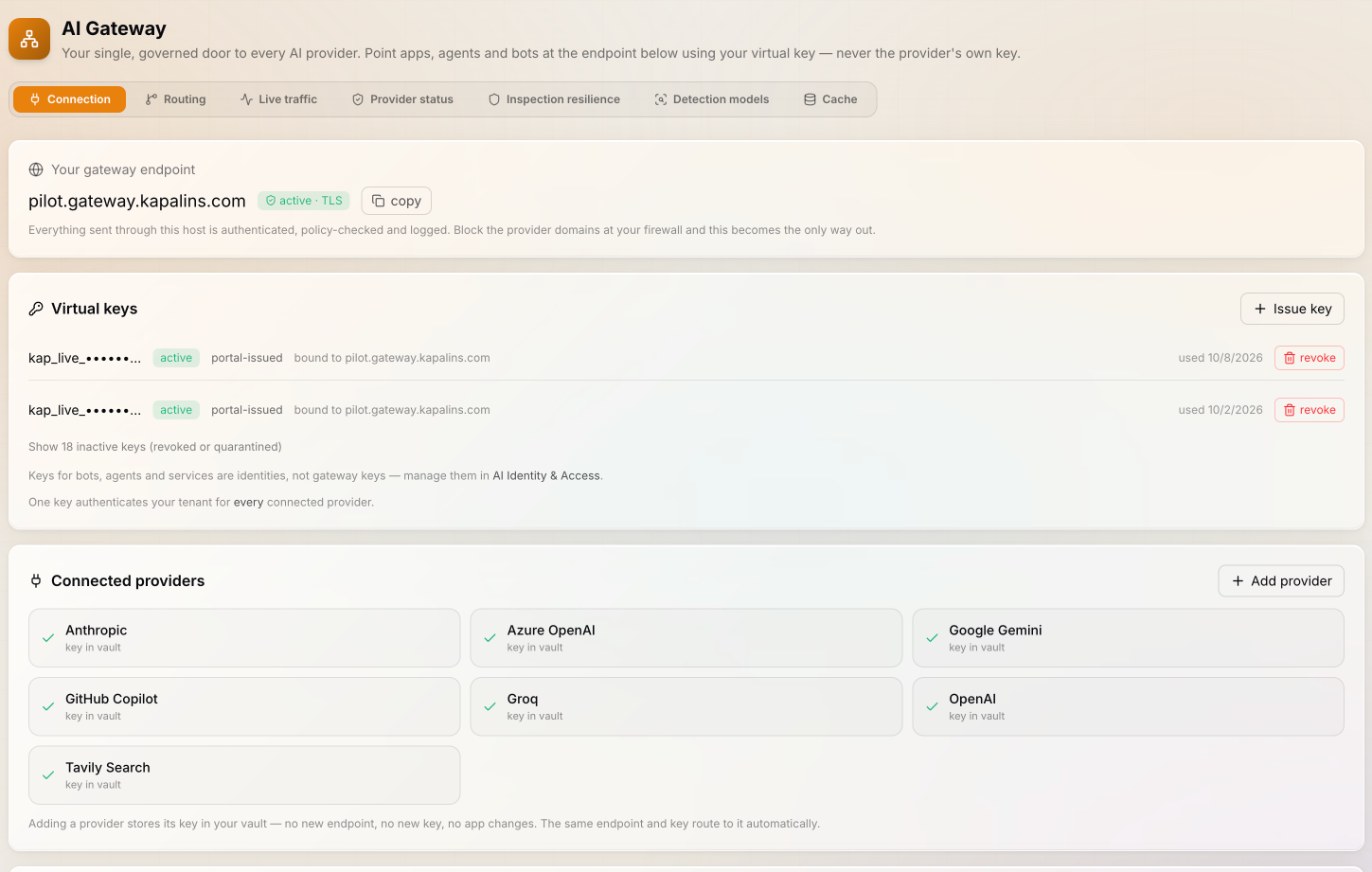
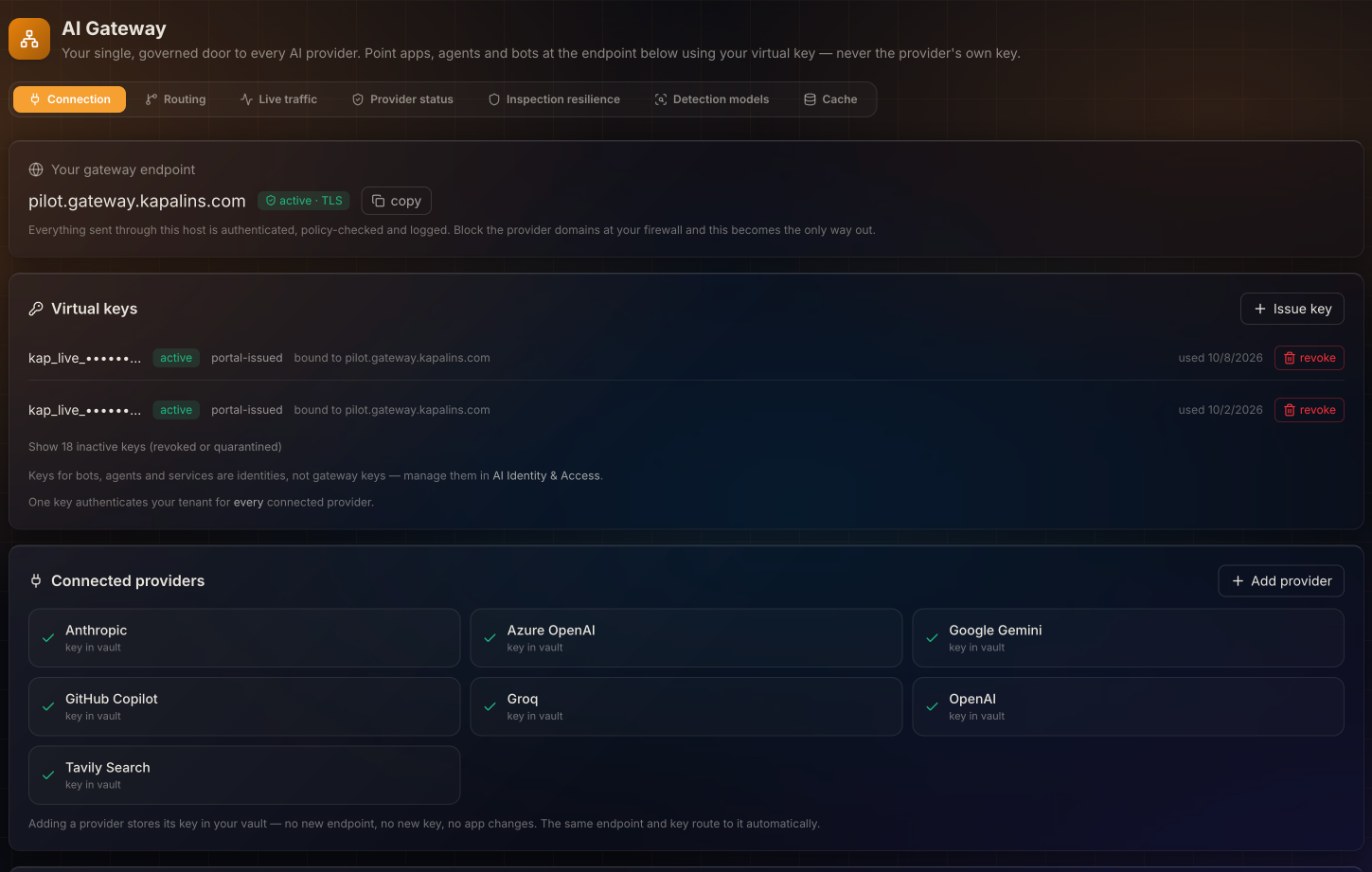
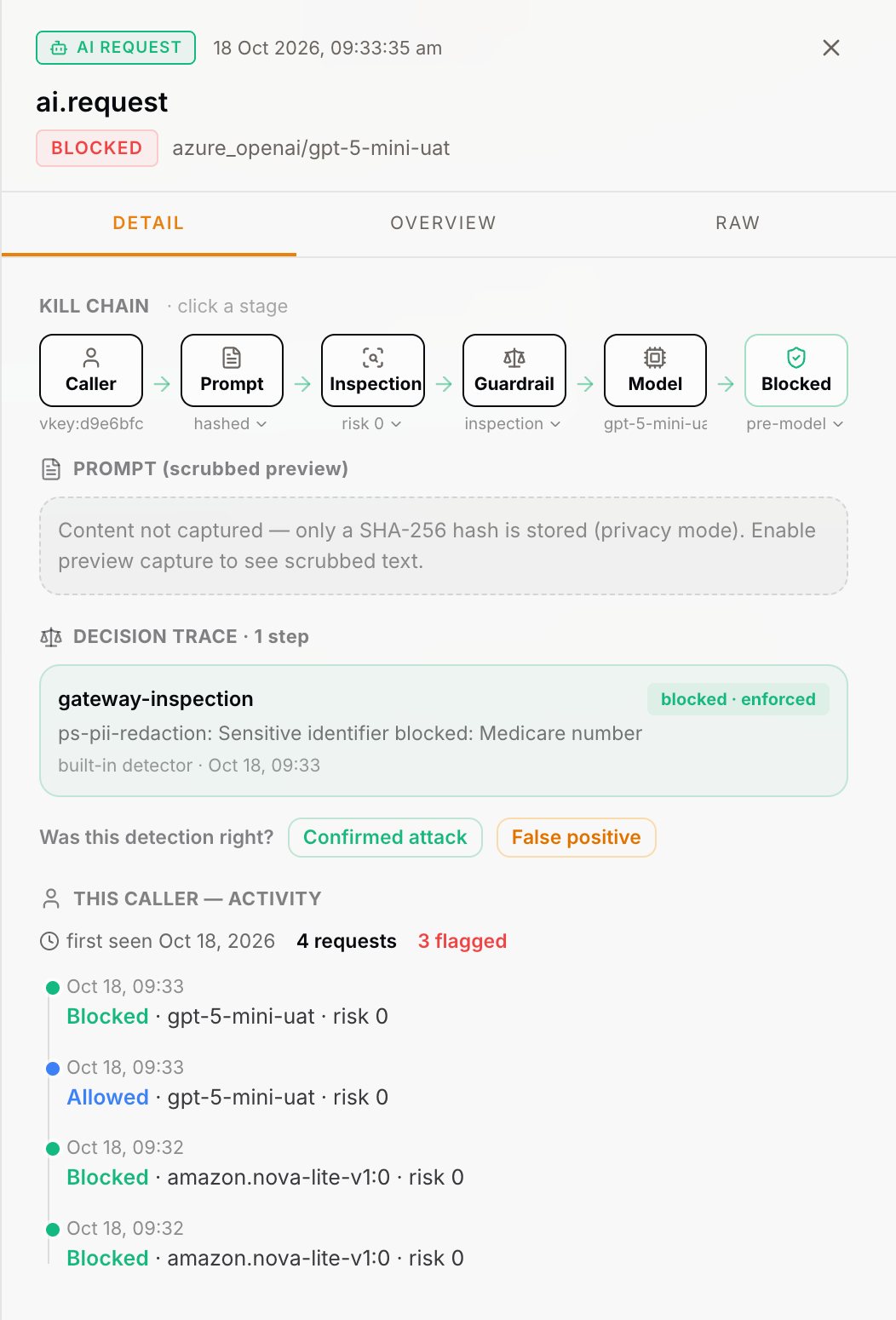
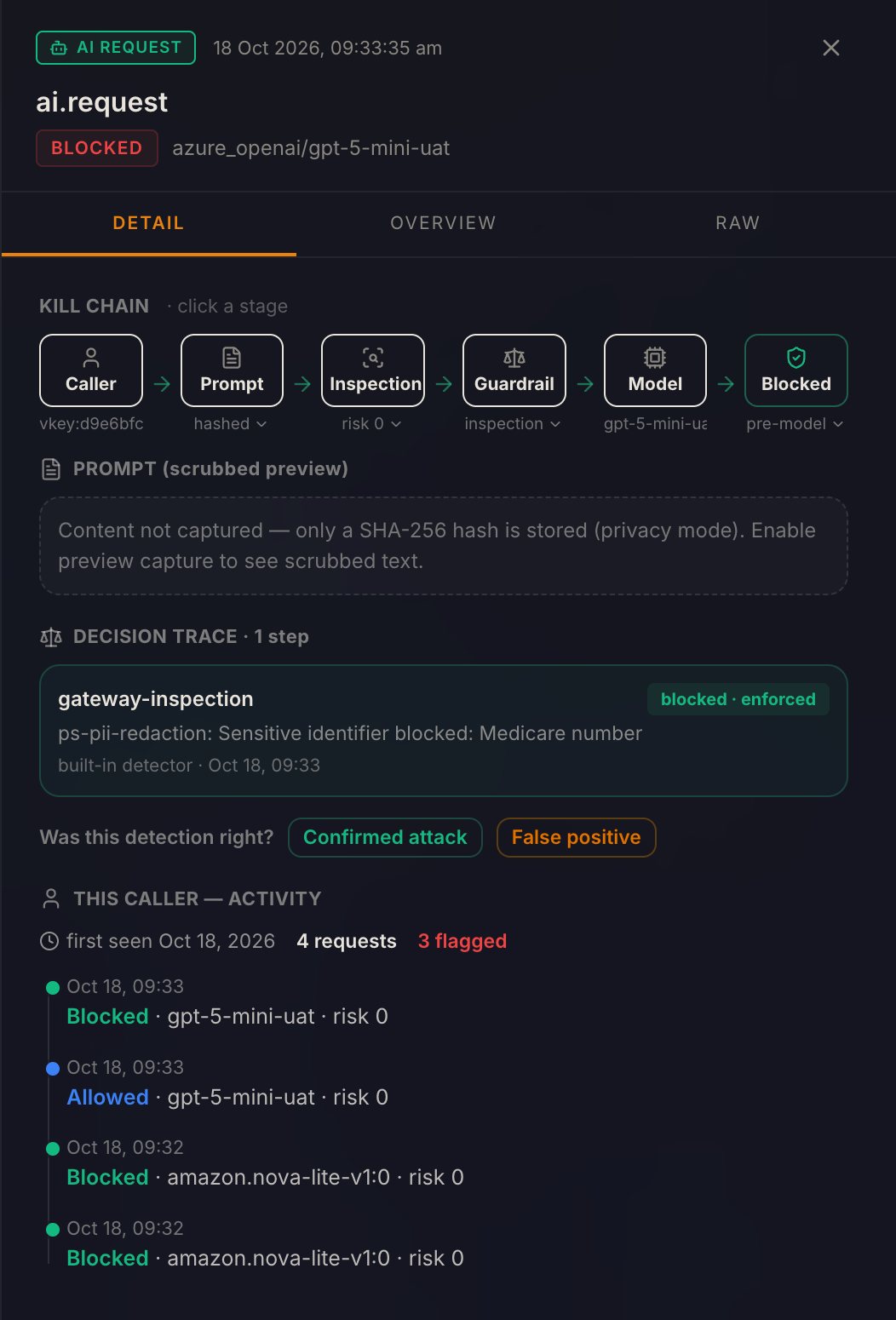
A blocked Azure OpenAI call, opened.
Open any call to your deployment in Logs and Kapālins shows who called, the deployment it was headed for, what was inspected and which guardrail stopped it, before the prompt reached your resource.
- A scrubbed preview or only a SHA-256 hash, your choice
- The caller’s recent history beside the verdict
- The same record feeds incidents, Microsoft Sentinel and the evidence pack
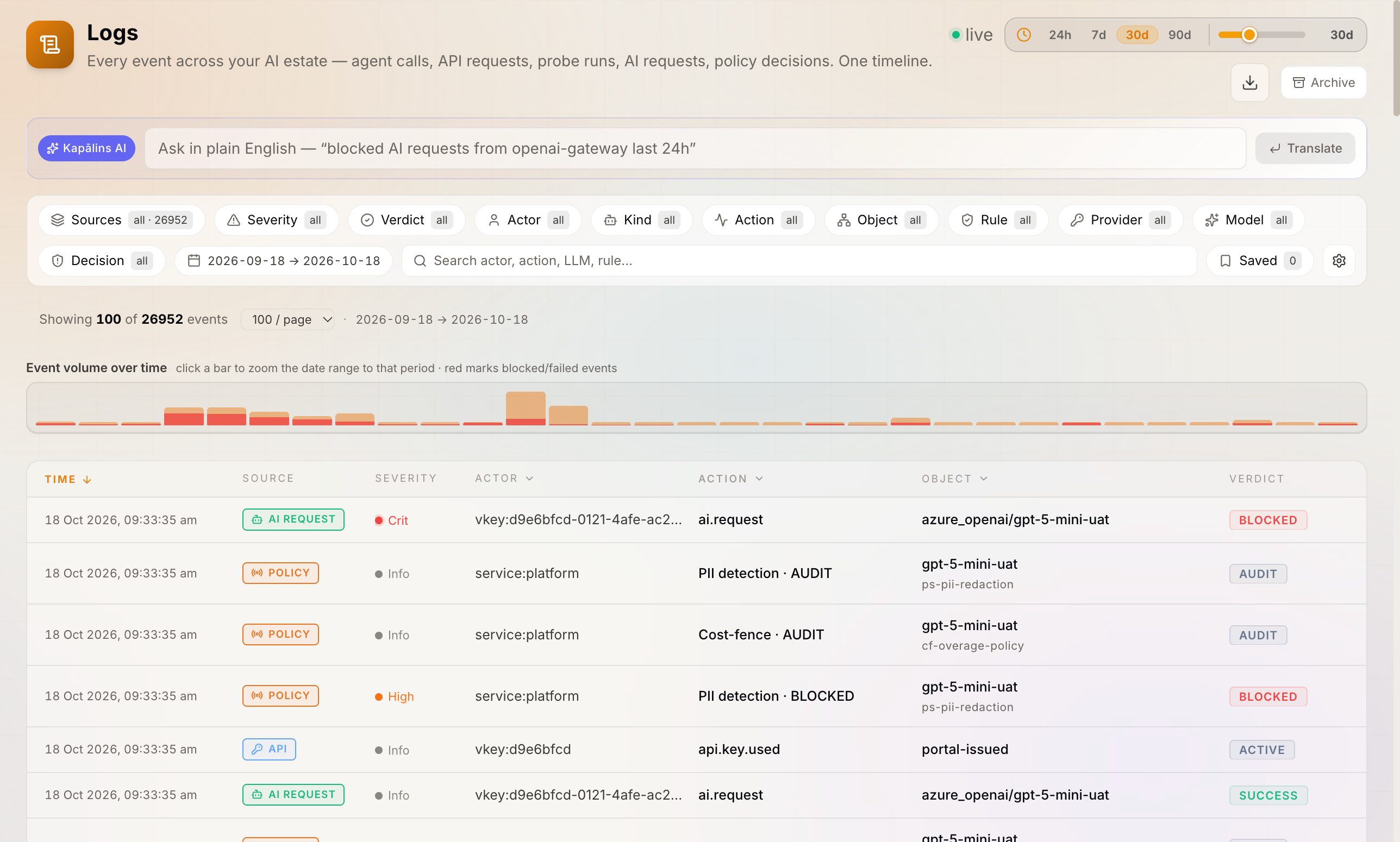
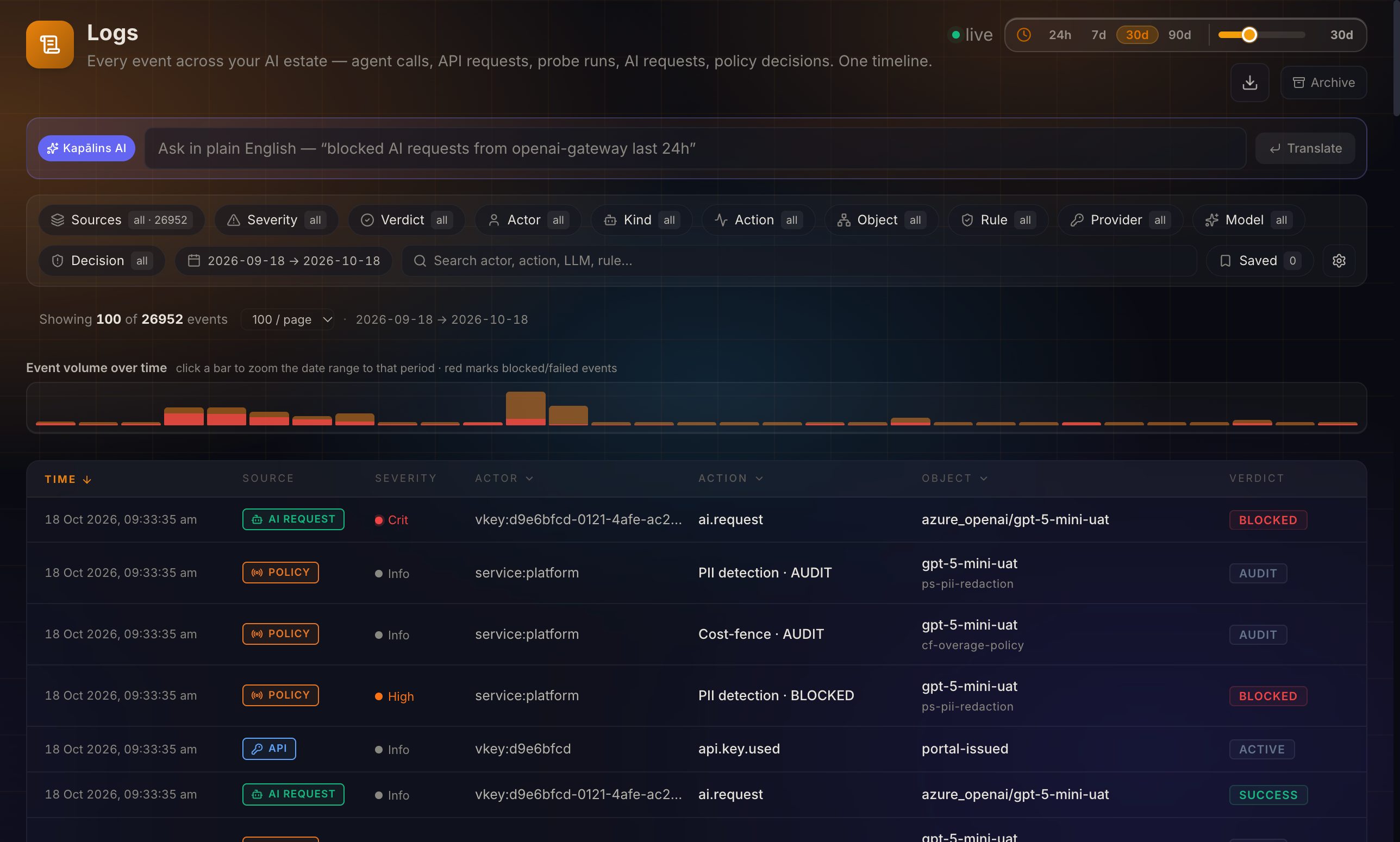
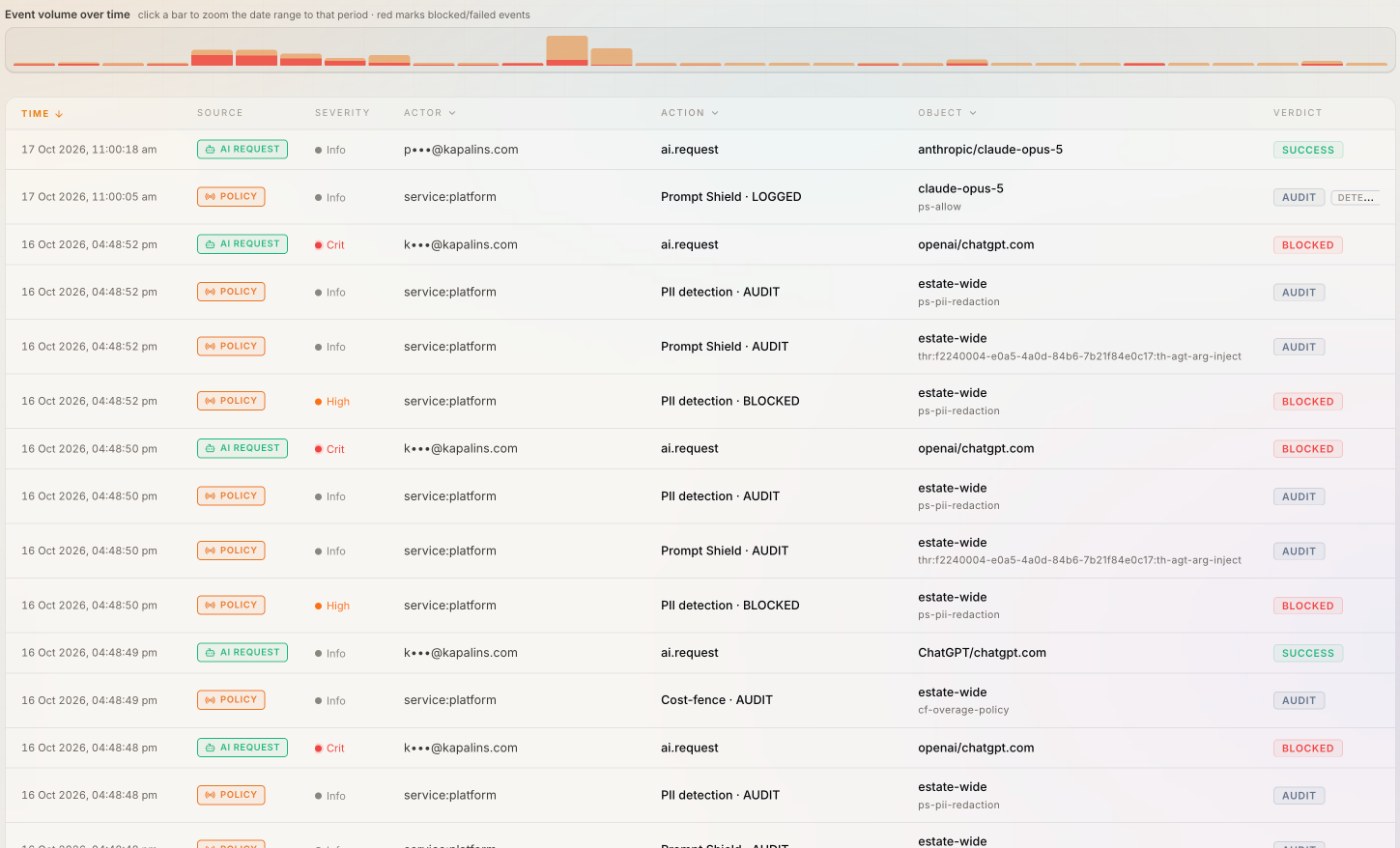
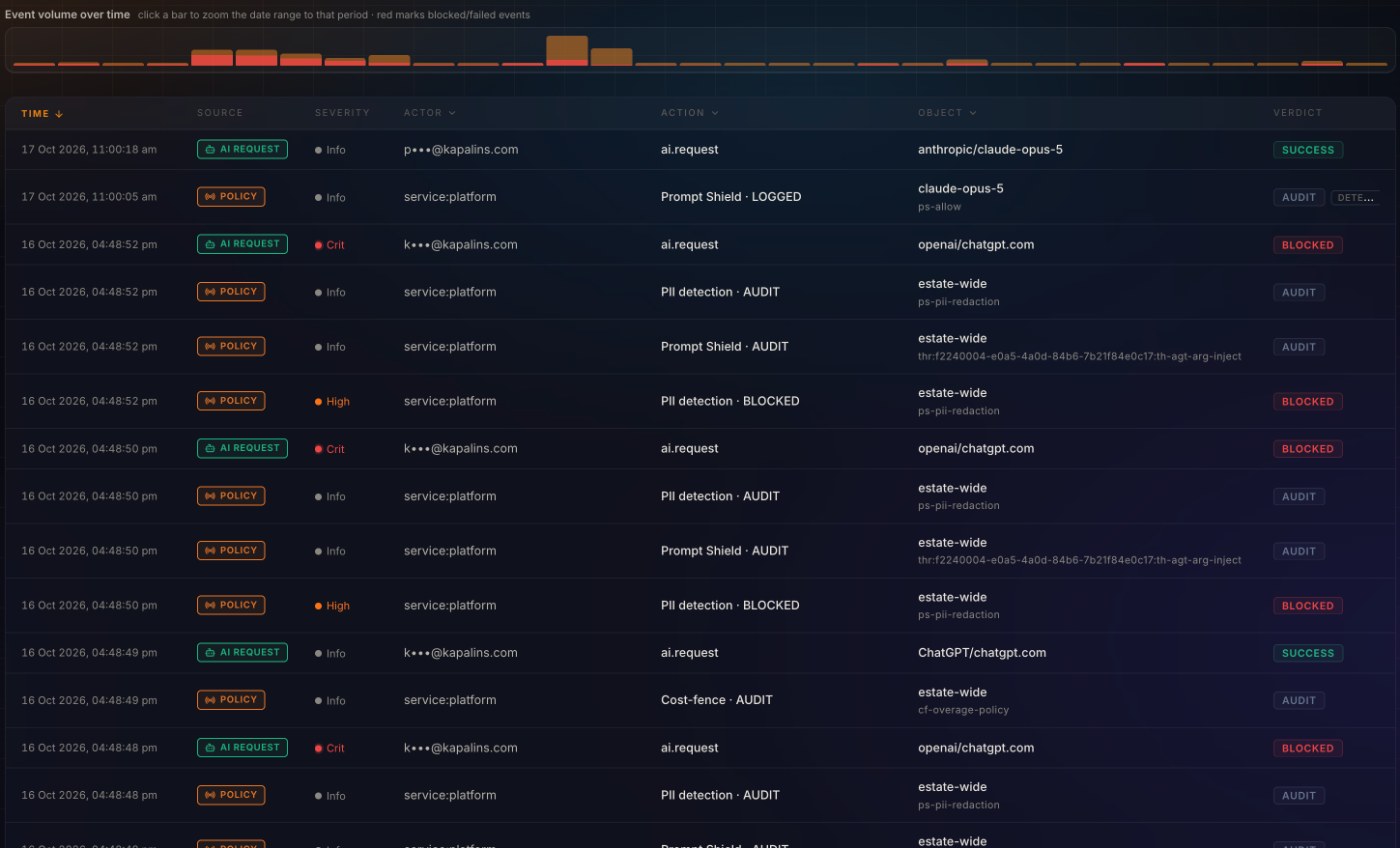
Azure Monitor, in the same timeline.
An app that calls the resource directly never touches the gateway, but the resource still logs it. Kapālins reads those records from Log Analytics and sets them beside the gateway’s verdicts.
- Read-only service principal
- Source label on every row
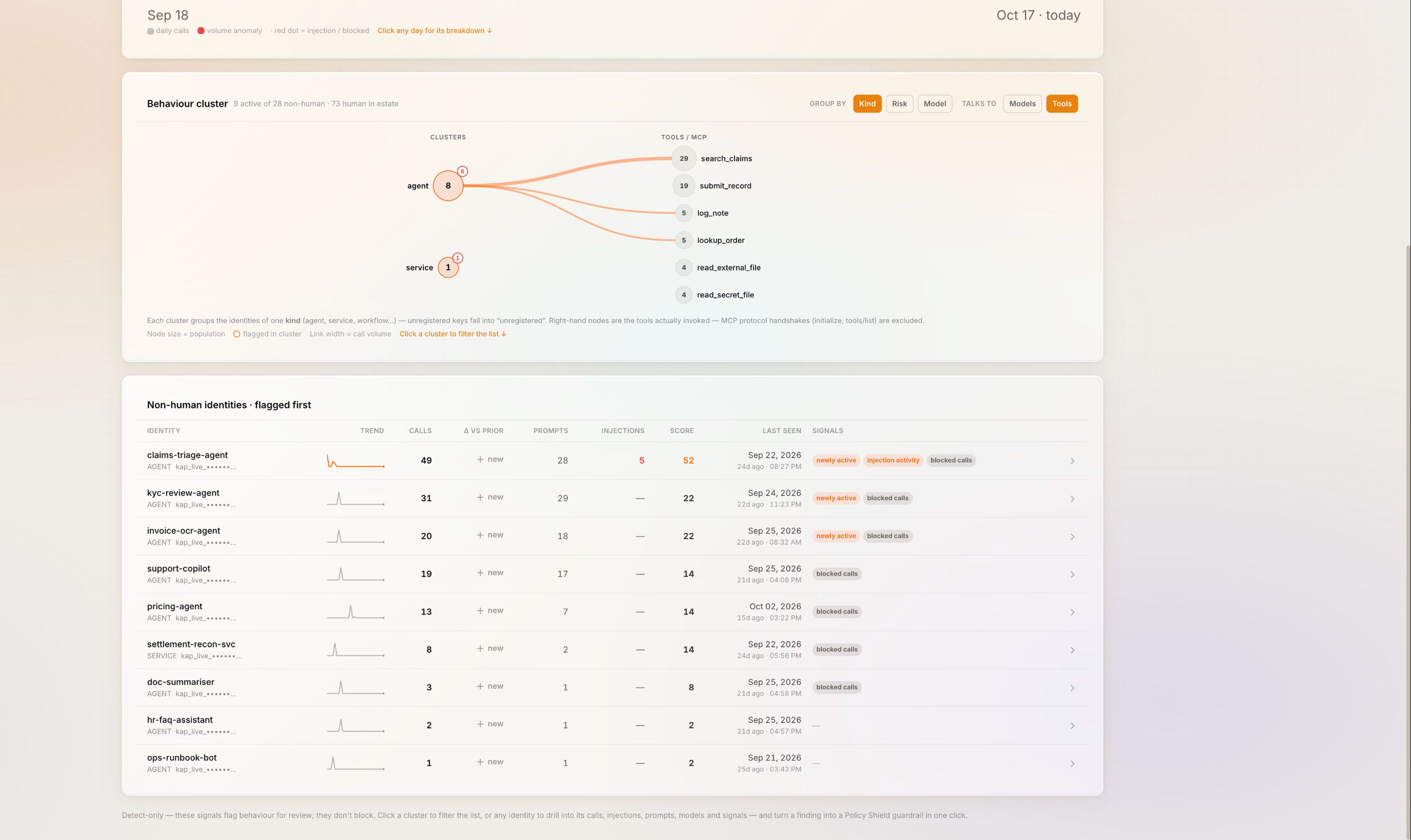
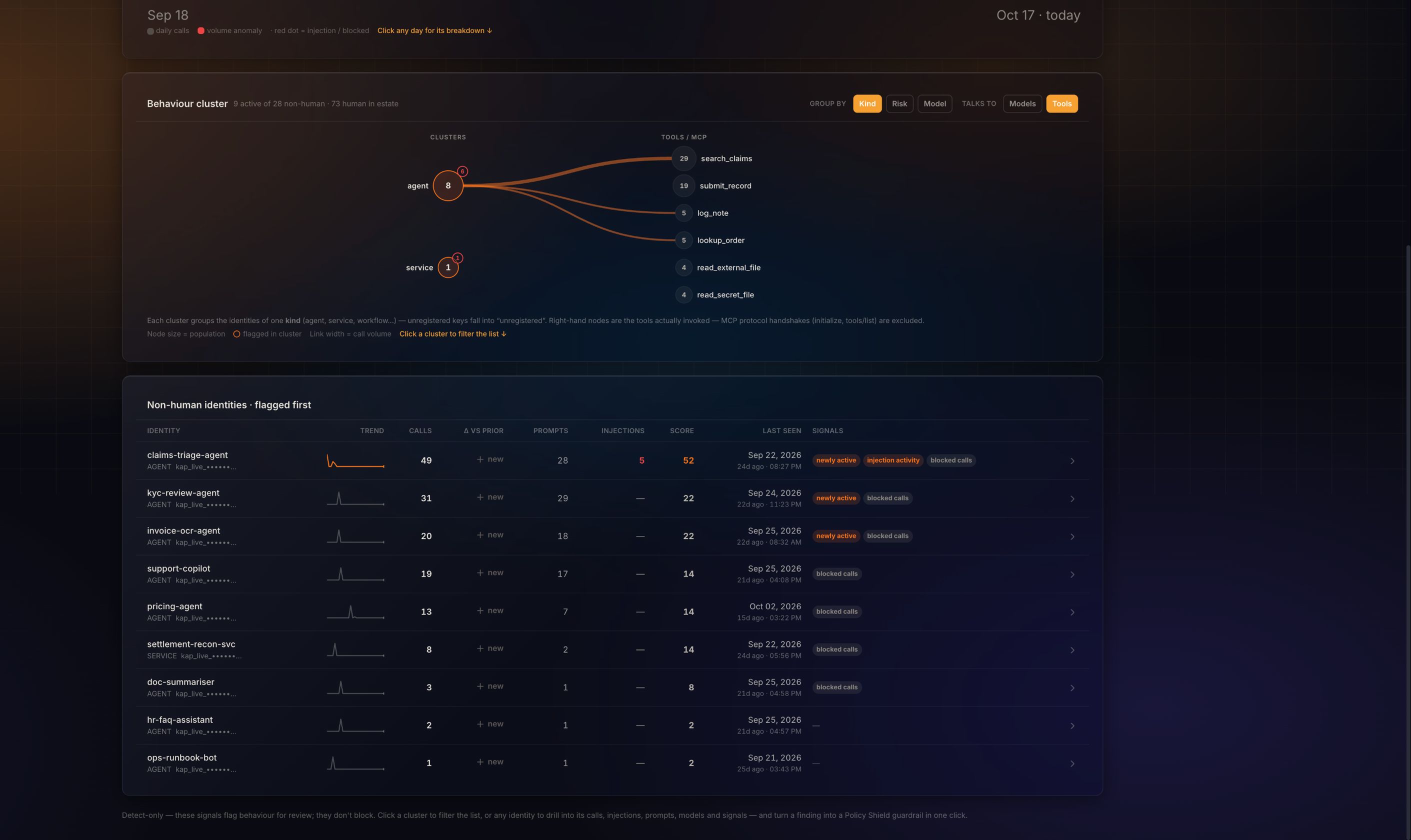
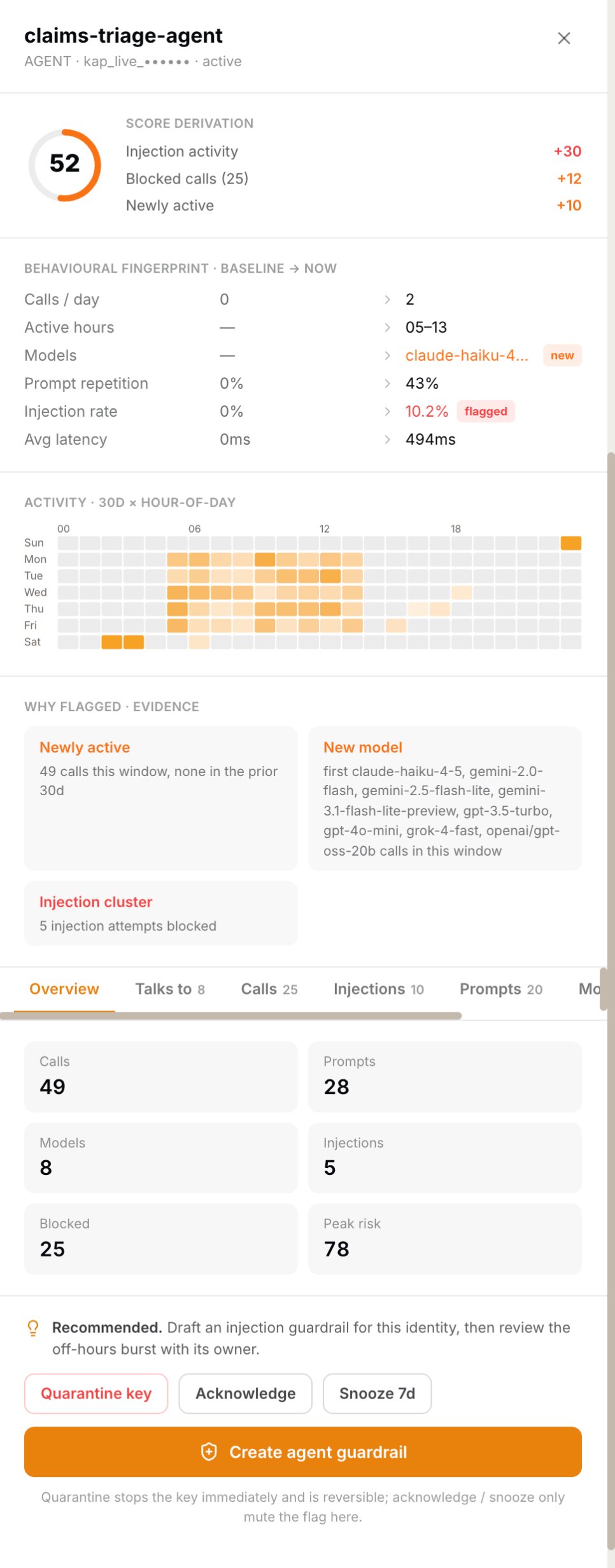
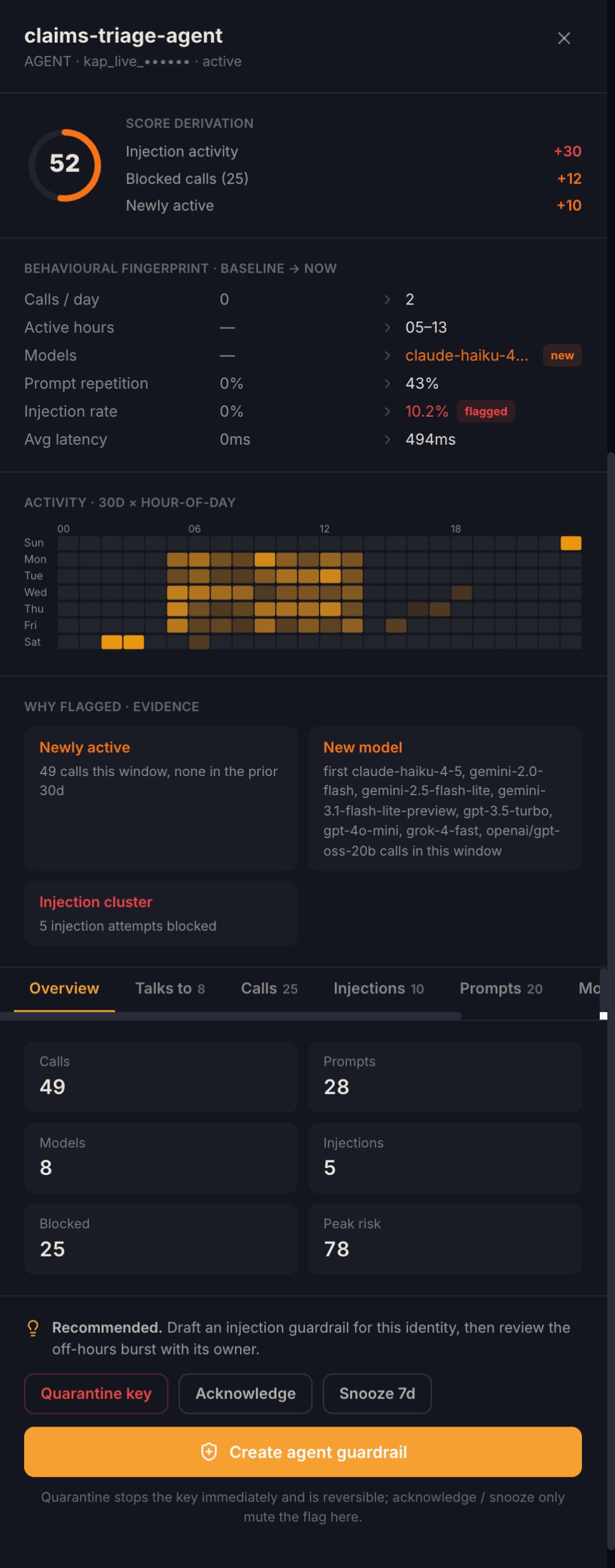
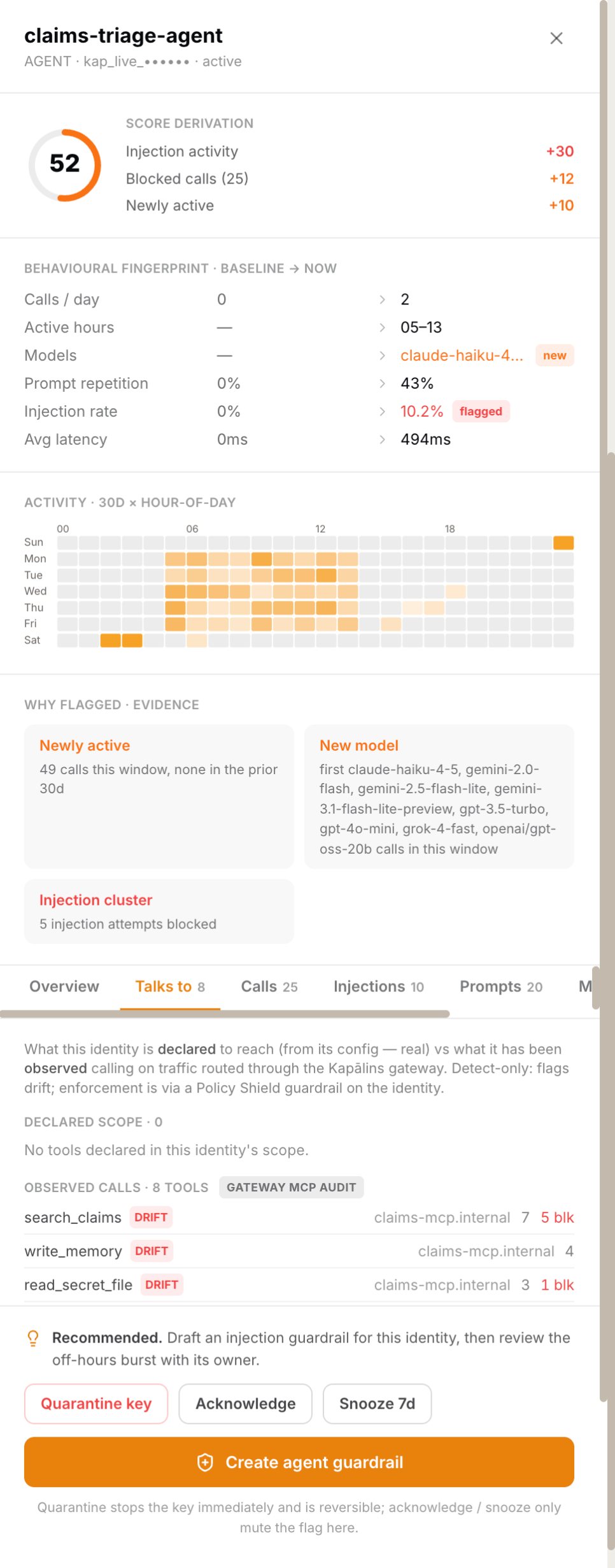
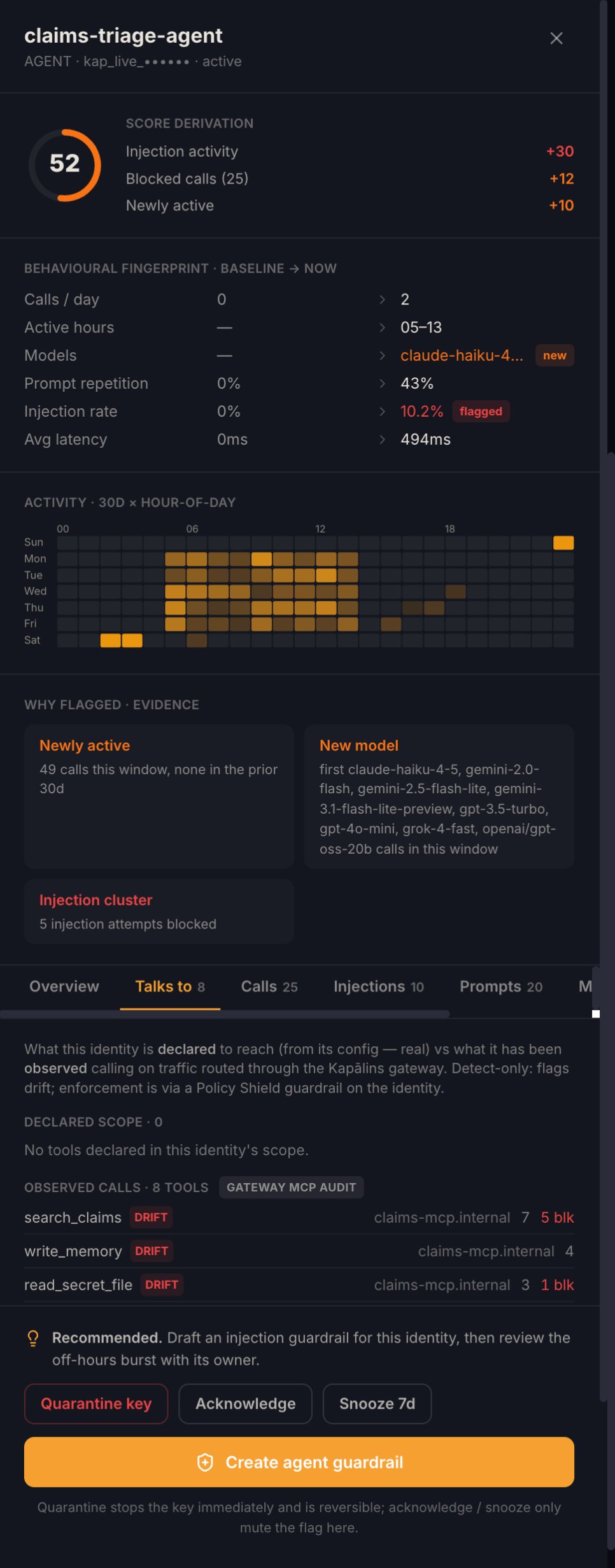
Agents calling Azure OpenAI, fingerprinted.
Every agent and service key that calls Azure OpenAI through the gateway gets a behaviour baseline: calls, active hours, models, prompt repetition, injection rate. When one drifts it is flagged with the reasons, and one click drafts a guardrail or quarantines the key.
- The tools and MCP servers each agent actually invoked
- Detect only by default; quarantine is one click and reversible
Every Azure OpenAI model, approved or not.
The Probe Runner, the garak red team and Alignment Lab test each model you use, through your own key. A model is approved, conditional or blocked, and Policy Shield enforces the verdict at the gateway.
- Injection, unsafe code, harmful behaviour and hallucination suites
- A critical finding holds new use until someone approves it


Four steps.
- Collect the endpoint and keyFrom the Azure OpenAI resource: its endpoint URL and one of its keys.
- Add a reader principalA service principal with the Reader role, used once at connect time to list deployments.
- Add Azure OpenAIIntegrations › Azure OpenAI › paste the endpoint, key and principal. Deployments are listed live.
- Add Azure MonitorIntegrations › Azure Monitor › your Log Analytics workspace, for calls that skip the gateway.
See Azure OpenAI governed in thirty minutes.
Bring the person who holds the credential. We connect it live and watch the first events land.
Questions buyers ask.
Does the gateway add latency to Azure OpenAI calls?
Policy Shield runs in the request path. Each family can be set to detect only, and the gateway reports its own added time per call in the timeline.
Do my applications need code changes?
A base URL and a key. The gateway accepts the OpenAI and Anthropic formats, so request and response handling stay as they are.
Can Azure OpenAI be governed without the gateway?
Routing is what makes inline control possible. AI that cannot be routed, such as hosted copilots, is governed from its audit logs, identity grants and the device sensor instead.